Gut health · 7 min read
Fibre without the fuss: building a gut-friendly day
Dietary fibre is not a single nutrient with a single job. Different fibres influence stool consistency, fermentation, cholesterol, blood glucose and fullness in different ways. The strongest approach is variety: whole grains, legumes, vegetables, fruit, nuts and seeds across the week.
The health signal is consistent
Large systematic reviews and meta-analyses associate higher fibre intake with lower rates of cardiovascular disease, type 2 diabetes, colorectal cancer and all-cause mortality. Randomised trials also show benefits for body weight, cholesterol and blood-pressure measures.
The evidence supports food-first patterns rather than chasing one isolated fibre. Whole foods deliver multiple fibre types alongside micronutrients and plant compounds.
Aim for a useful range, not instant perfection
A practical adult target is around 25–30 grams or more each day, depending on the guideline, energy intake and individual needs. Many people eat much less, so an immediate jump can cause bloating, gas or discomfort.
Add fibre progressively over several weeks and drink enough fluid. One extra fruit, a serving of legumes, or replacing a refined grain with a whole grain is a more comfortable starting point than changing every meal at once.
Build diversity across the day
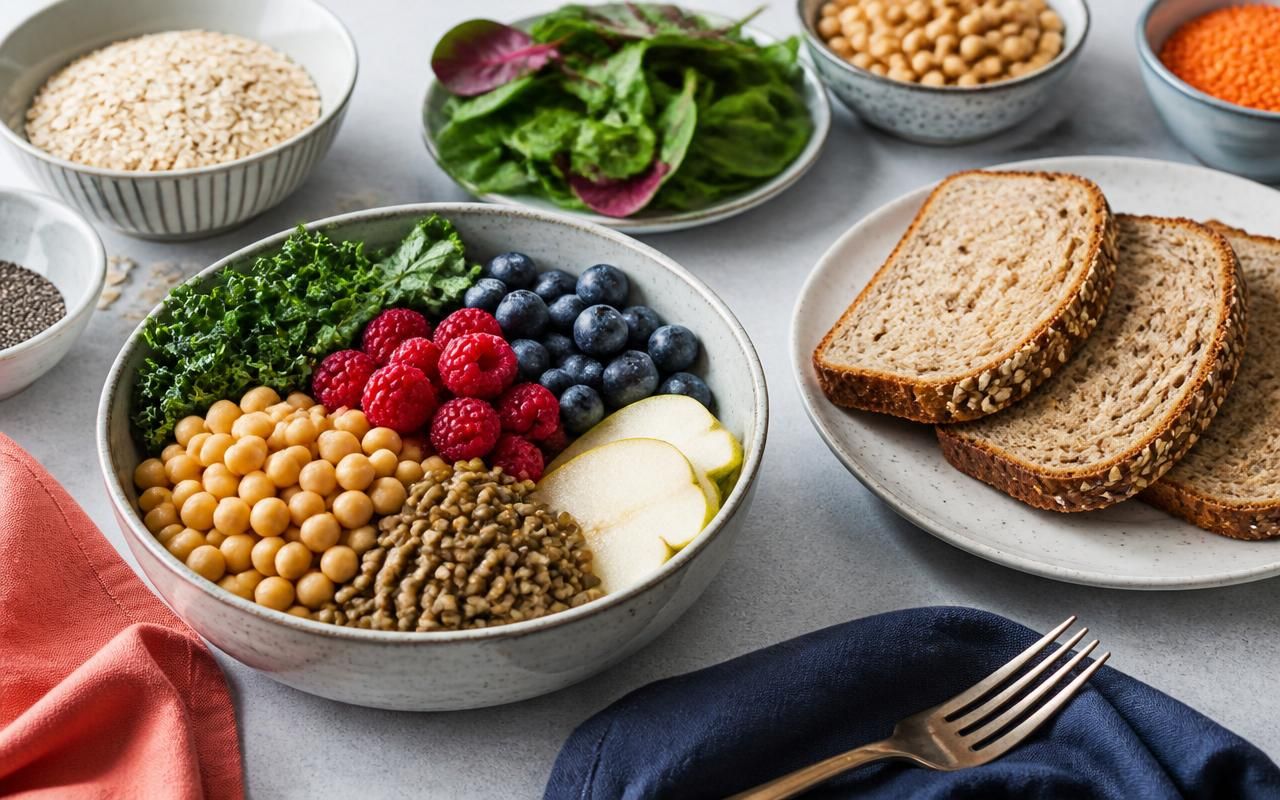
Breakfast might combine oats, berries and seeds. Lunch can include lentils or chickpeas with vegetables and wholegrain bread. Fruit and nuts make a useful snack, while dinner can add beans, bulgur, brown rice or another vegetable serving.
No single food must appear daily. Rotating plant foods helps make the pattern nutritionally broad and easier to enjoy.
More is not always better for every gut
People with irritable bowel syndrome, inflammatory bowel disease, bowel narrowing, recent gastrointestinal surgery or persistent symptoms may need the amount and type of fibre adjusted. Some fermentable fibres can worsen symptoms even when total fibre is not excessive.
A low-fibre or low-FODMAP approach should be targeted and reviewed rather than treated as a permanent definition of healthy eating. Seek clinical guidance for bleeding, unexplained weight loss, persistent bowel changes or significant pain.
Sources
Where this information comes from
Peer-reviewed clinical studies, position stands and consensus statements.
- 01Reynolds A, et al. Carbohydrate quality and human health: a series of systematic reviews and meta-analyses. Lancet. 2019;393(10170):434–445. View study
- 02McRae MP. Dietary fiber is beneficial for the prevention of cardiovascular disease: an umbrella review of meta-analyses. J Chiropr Med. 2017;16(4):289–299. View study
- 03Barber TM, et al. The health benefits of dietary fibre. Nutrients. 2020;12(10):3209. View study
This article is general information, not individual medical advice. For a plan matched to your health history, book a consultation.